St Croix River Road Ramblings

Welcome to River Road Ramblings.

Thursday, September 24, 2015

September's Gray Wet Weather

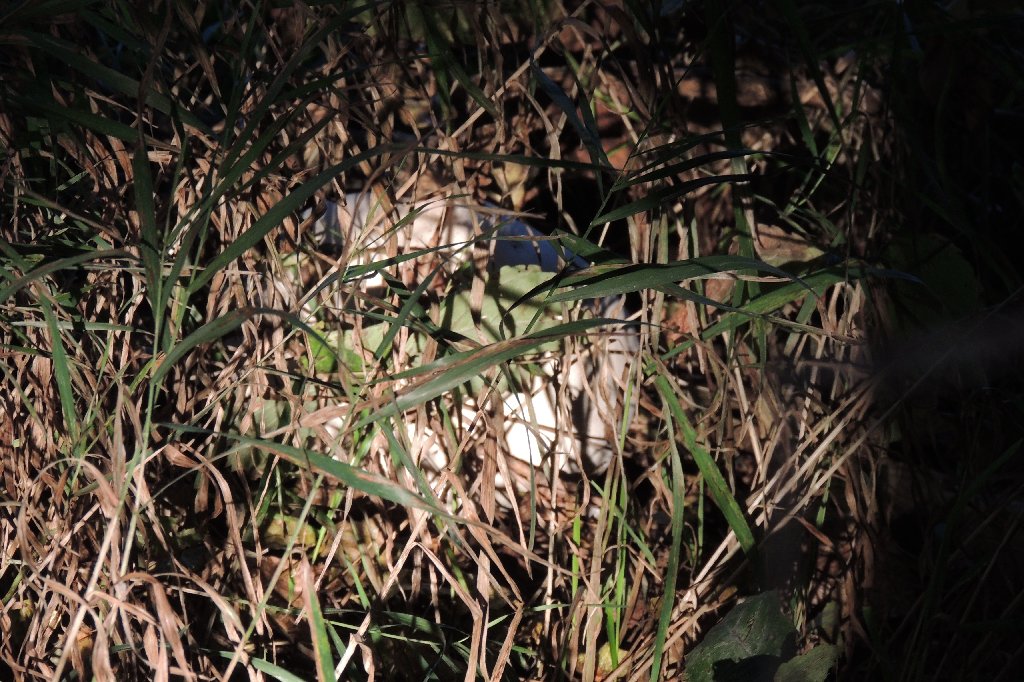
The wet weather has stimulated mushrooms.  I wonder if these are edible?  Here kitty, kitty, kittty... 


Yellows of poison ivy contrast with the red sumac

Old fields on the Sterling Barrens grow thickly to big bluestem, a pre-settlement grass.  This is the Rob Perry place (later the Harold Brenizer Mink Farm)

Turkeys had a good hatch and flocks gather to eat grasshoppers along the St Croix River Road


All 6 trumpter swan cygnets made it through the summer NW of Cushing near the Hanson Farm

Mom's asters have naturalized across the road from the farm

The unused cow pasture across the road from the farm--the Noyes place.

St Croix River Road Ramble -- Apples


Picking apples yesterday and today for the 10th Annual River Road Ramble between St Croix Falls and Grantsburg WI.  We have a farm market with apples, squash, pumpkins and maple syrup as well as some farm stuff on a garage sale.   

Picking Apples brings back memories of the Hanson orchard that at its peak had 125 or so full sized apple trees.  Some Autumn's the orchard sold hundreds of bushels of apples.  Now it is dwindling but still productive.  
Through out the orchard are tiny crab apple trees to feed the robins and other birds each fall -- and to try to lure them away from the regular apples.  

A few trees loaded down with decent size apples this year.  Others had none and some a few.  Each year different ones seem to choose to yield.  Dad mulched each with manure in late fall to rot over the winter and stimulate growth in the spring. He also had bee hives in the yard for pollinization. 

The size when I begin spraying Sevin every 2 weeks. 

The deer trim the apple limbs all winter and spring as high as they can reach.  That is why we grow full size apple trees.  An expensive fence would solve the problem

The birds nest in the trees and typically get one spray of Sevin each batch of young ones.  The small amount likely kills their bird fleas and as far as studies go show no effect on the birds themselves.  These all fledged and joined the flocks that pick holes in the young apples making blemishes in them as they grow larger.
Back in the late 1950s, Dad and Mom made a decision to turn the Hanson farm into a part-time orchard to add to the dairying business.  They bought 100 apple trees to add to the 20 trees they already had and planted them in the yard and fenced off an area east of the driveway for the rest of them. 

Full sized apple trees take many years to bear, but by the mid 1960s and since, the farm includes a fall apple sale season.  As Alberta and VR got older they no longer replaced the trees that died and let folks pick their own apples. 

As far back as I can remember, there were apples for sale on the farm, but on a small scale.  The big hibernal "pie apple" tree was good for 20 bushels of pie apples at $5 per bushel.  Most of the neighbors reserved their bushel for sauce and canning and later freezing.  

Harold Jensen always reserved 1-2 bushels of Northwest Greenings to be wrapped and saved for spring eating -- a keeper apple.  The trees are long gone as is Chev and Ferguson dealer and Cushing garageman Harold.  

Most folks had a few apple trees on their farms, but few sprayed them.  Some years apples are worm free naturally, but most years worms get into them.  As people got used to "store bought" apples that were worm free, they no longer wanted to use their own wormy apples and so came to the orchards where Dad sprayed the trees.  

Sprays have changed over the years.  Bugs get immune to some; some are found to be dangerous and apple trees are bred to be more disease and bug resistant.  Dad used a fungicide and insecticide in the spring, switching to insecticide only in the summer.  

I still spray.  From June through August (and sometimes in warm Septembers) I spray Sevin every 2 weeks.  Generally this gives us worm-free apples.  A few where the birds peck holes, still can be damaged, but mostly they are OK.  I don't use fungicides -- they are rather dangerous to the sprayer and so my apples can have apple scab or apple blight -- a cosmetic surface blemish that has no effect on the fruit inside, but looks imperfect.  

Sevin is about the mildest of the sprays available and breaks down most quickly  3-10 days. It is very close to the medicine I took for myasthenia gravis called pyridostigmine and actually works the same way, a medicine for me but a killer for bugs.  

I don't spray during bloom time so bees and butterflies are not killed and I spray when their is no wind to minimize drift.  I mow the area under the trees so no milkweeds or other blooming plants attract butterflies to the sprayed area.   I also leave another area, 3 times the orchard size unfarmed, and unsprayed growing the milkweeds and wild plants.  In Wisconsin, most of the apple pollination is done by wild insects including bumble bees, so having a nearby bee reserve is important.  

Although I can raise pumpkins, squash, and most of my garden organically, I have never found a person who was happy to buy wormy apples.   Mom tried alternatives like hanging jugs of vinegar water in the trees, but they never were successful.  

Up the road 1/2 mile is my brother Ev's hunting cabin and a dozen apple trees that he doesn't spray.  Some years they are mostly wormfree, and others they are not.  Since one can't predict which kind of year it will be, and I do want to sell apples, I spray them.  

Life is a mixture of choices, and sometimes the food we like needs to be at least partially protected from non-human life.  The deer and birds are big on sharing my trees and fruit, but the coddling moth and apple maggot are not on my list to preserve. 


Wednesday, September 23, 2015

St Croix River Road Ramble on the Farm

Our sign for the 10th annual St Croix River Road Ramble
Saturday, September 26th 9-5.
(information at the website   

The 2015 Ramble Ambassadors will be at the Cushing Museum 10-1.  Museum open 9-4 pm 
Scott plans to sell maple syrup, pumpkins, squash, apples and some yard sale stuff from the farm. 

2015 Ramble Button

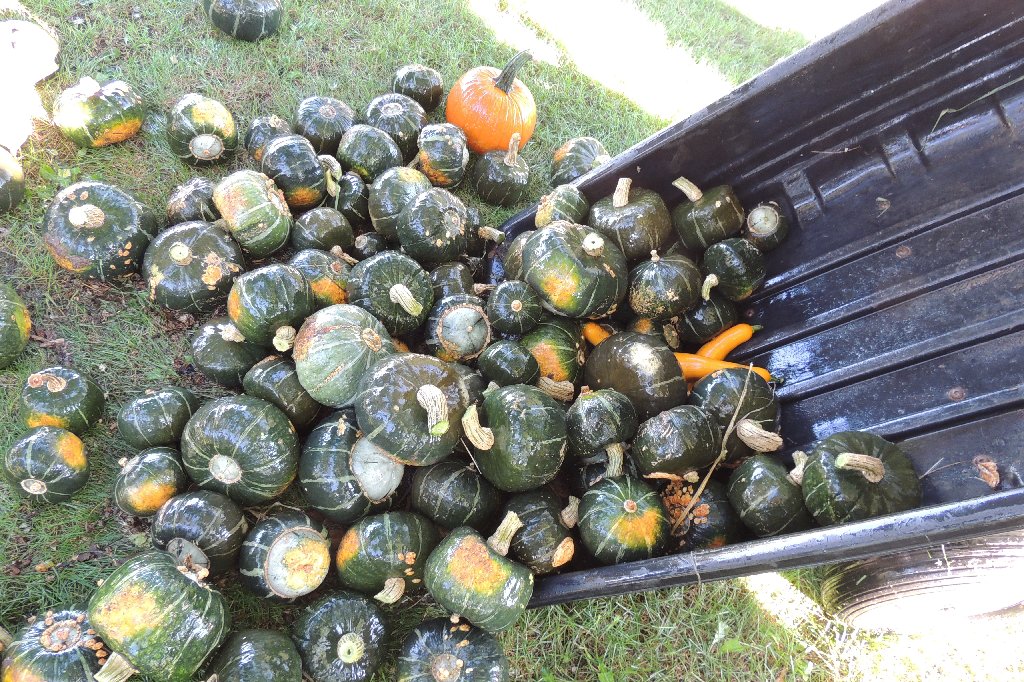
Even though the deer ate many of the pumpkins, some are left for sale and lots of buttercup squash.  

A new flexible flyer disk costs about $60.  This one, used by an only child on Grandpa and Grandma's big hill, is listed at $20.  

Monday, September 21, 2015

Squashed Expectations

Harvest time is here on the farm.  Today it was the squash garden.  On the edge of the cornfield just west of the yard, on a small unused corner, last spring we broke the sod, dug it up and planted many squash seeds.  
The vines are mostly brown and the garden weedy.  Next to mow it and dig it up, and put a cover crop on for winter. 


Washed to clean off the dirt.  A wet year causes edema on the skin of squash.  It looks strange but has no effect on the inside of the squash.  I think some of it is rather attractive!
From the Internet:
Edema appears more often in cool, wet growing years and is therefore wrongly confused to be a disease exacerbated by weather conditions. Even though it is not a disease, excess water is the clue to its cause. Under periods of excess moisture, plants can take up more water than what they can use and under cool conditions they can’t turn it into more plant or fruit and are not able to transpire it through the leaves. However, they still have to do something with it!

As the plant cells fill with water they can’t get rid of, they enlarge and eventually burst. After bursting, the wounded tissue heals and forms a dry, corky area. The damage is generally only superficial, but greatly affects visual quality. Not too serious on pumpkin or squash fruit, but very serious on collard greens or kale.


Many didn't come, and after several replantings, finally the hills were all up.  As they grew, we realized that about half of the garden was in the shade of tall walnut trees half of the morning.  They did poorly and set few squash that were very small.  Part of the problem is black walnut tree roots sap the ground as well as put out jugalone, a natural killer of competing plants.  So that part of the garden was almost worthless and will return to lawn in the future. 

The north 1/2 was in full sun all day and away from the trees.  It yielded wonderfully.  As we picked dozens of squash this afternoon, we found many partially chewed.  Ground hogs, deer, rabbits and squirrels all probably took their turn.  They ruined much more than they ate.  Animals are very wasteful of fruit and vegetables, ruining much more than they eat.  Our apples suffer from one or two holes from birds; eaten branches, and ripped off and broken branches from bears and deer. 
The result of explosive growth!

Anyway, even with the depredation, we have many good squash left for the sale on Saturday, the 10th Annual River Road Ramble.  
Tomorrow we pick the pumpkins, also showing signs of animal damage. 

Stalking the Wild Mushroom

With the wet cool autumn upon us, it is time to put on our boots and take to the woods to find the mushrooms of September. 

 There are many kinds of mushrooms, toadstools, and their friends in yards and woods in NW Wisconsin, and unless you know which are edible and which are deadible, you need to beware.  

Puff balls 

I test every mushroom on the neighbor's cats and if they seem fine after 24 hours, I figure it is safe.  


Friday, September 18, 2015

10th Annual River Road Ramble

Link to the 10th annual St Croix River Road - Hwy 87 Ramble
Ramble Stops Map and Guide.
Only buttercup squash this year
  
Back in 2006, when I was writing River Road Ramblings for the local newspaper, I was struck at how beautiful the fall color was along the old St Croix River Road between St Croix Falls and Grantsburg, and invited my readers to take a Ramble at the end of September along the route, promising a guide for some historical information, some historical stops, and maybe a few garage sales and farm markets.  

Ten years later, I no longer write the column (I write here instead) and I still am inviting my friends to take a River Road Ramble along the oldest road in this part of the country and loop around via Hwy 87, the shortest State Highway in Wisconsin as well as the one farthermost west in Wisconsin.  
Eating and cooking apples

We have maps and tour guides for the 27 stops along the way this year.  Today, Margo and I were out and took the loop tour checking on how much fall color was ready--not so much, but tinges here and there of yellow, orange and red and likely a week from now on the 26th when the Ramble day comes, a lot more.  

Here on the farm we begin picking apples, squash, pumpkins, bottling maple syrup and checking on tomatoes for our Hanson Farm stop on the Ramble.  We are gathering some of the miscellaneous from the sheds and barn to offer it on a yard sale. 
Some pretty huge pumpkins


 Sort of embarrassing at how much is junk vs treasure! 
The sand garden tomatoes are doing fine.  Those on the home farm died long ago of blight

Giant field pumpkins did OK

Melons are finally ripe and this one tastes pretty good

Starting to nibble the pumpkins nearby

Soy Bean field denizens 
2015 Season Maple Syrup
We will be open 8 - 5 on Saturday September 26th at the farm on Evergreen Avenue north of Cushing.  Watch for the signs along Hwy 87 and the River Road   We are one of 27 stops on the tour this year.  Now I have to go declutter the yard and make it look like someone other than a bunch of hillwilliams live here on the Hanson Farm.  

Wednesday, September 16, 2015

A Walk on the Wild Side

As the first day of Fall approaches on the 23rd of September, took a walk to the pond on the Farm.  Still mostly green with the first frost still another week or two away and only hints of fall color.  
You can join me on the walk with the photos here. 
Grape vines are bereft of grapes this year as they blanket the old corn crib

Possibly up to 200 bushels per acre for corn this year with almost ideal growing conditions.  Of course the price is about 1/2 of 3 years ago.  

A row of Siberian crap apples that I ordered from Gurneys as windbreak trees and planted the summer of 1970 highlighted with some woodbine red climbing vines

I kept a narrow path through the corn field from yard to pond.  The deer use this to come to eat apples and then return to sleep and get a drink

The pond is full and the deep grass, goldenrod, milkweeds, etc., make a wildlife oasis in the midst of corn fields. 

Fall asters of varying shades of purple are in full bloom as is the goldenrod


A few months ago, I made a jackpine log turtle sunning raft to float on Dub Lake (our pond name after Dad's nick name -- Dub).  The turtles have found it and on brisk fall days warm up as they discuss the upcoming winter and where in the mud below they plan to hibernate.


Arrowhead plants, a favorite of ducks, line the shores.  Very few Vees of geese or flocks of ducks so far this fall.  Probably too mild to spur them to think about going south.  


The ravine that drains Bass Lake snakes through the farm providing a wildlife corridor that extends all the way to the St Croix River following Bass Lake Creek to Wolf Creek. 

The south bank of the ravine.  At one time huge beaver dams spanned the 50 foot wide ravine changing the wetland that straddles Evergreen Avenue from cattail swamp into pond.  Later it was a cranberry marsh with water level regulated in the ravine

The 1970 planting of Siberian crabs was reseeded along the fencelines by robins carrying the seeds and now here and there are trees that will be picked clean by the fall robin migration in October.  Not a robin around here for the last month or so, but soon they will sweep through eating the berries on jack-in-the pulpits and apples.  What they leave, they will pick in the spring on their return. 

The corn ears are 5 feet off the ground or more.  The stalks are 8 foot.  Probably the best corn ever to grow on the farm since it was wrested out of woods in the 1860s-1880s.  


The big cattail swamp that straddles Evergreen Avenue.  No openings in it--just solid growth including short willow brush.  

Looking mostly east over Evergreen Avenue on the hillside I mowed off to plant a pumpkin and squash garden next year.